
Built on the philosophy of mind
Character knowledge is organized around ideas such as the unity of knowledge and action. When a real question comes, the character first reads the situation, then brings reflection back to action.
The Zen Echo (智禅者) hardware series · Thinking AI character figurine
Not just a figurine that talks. Built on the philosophy of mind, the character has its own philosophical stance, personality, conversational style, and skills. Its answers bring the unity of knowledge and action to the questions you face today.
Grounded in thought · Distinct in character · Clear in boundaries
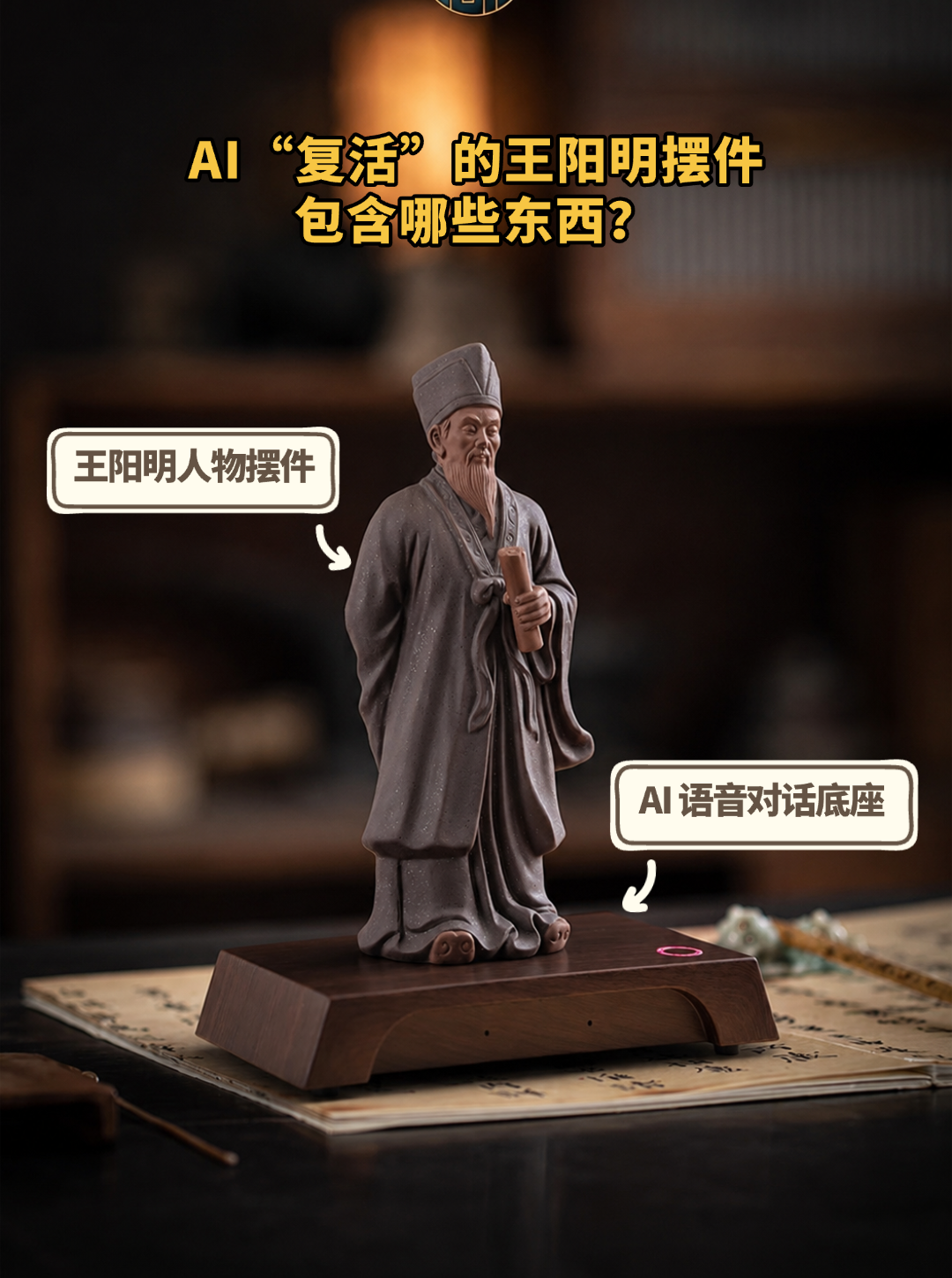
01 / Thinking AI
Wang Yangming was a Ming dynasty thinker. “Revival” here is a product expression: the figurine draws on his classic thought, turning it into the character’s knowledge, judgment principles, and way of speaking, so it can respond to today’s situations from a defined stance. It does not claim that the historical figure has returned or is speaking.
Character knowledge is organized around ideas such as the unity of knowledge and action. When a real question comes, the character first reads the situation, then brings reflection back to action.
It does more than retrieve answers. It looks at choices, emotions, and practice through the philosophy of mind, and asks a question when that serves better than agreement.
Beyond knowledge, there is a relatively stable character, a sense of proportion, and clear boundaries, so repeated conversations still feel like the same figure.
It speaks in a tone that fits the character, with voice treated as part of the design, rather than reciting generic answers.
Skills are configured around teaching the philosophy of mind, sitting meditation, and everyday conversation. Available capabilities and experience depend on the specific product version.
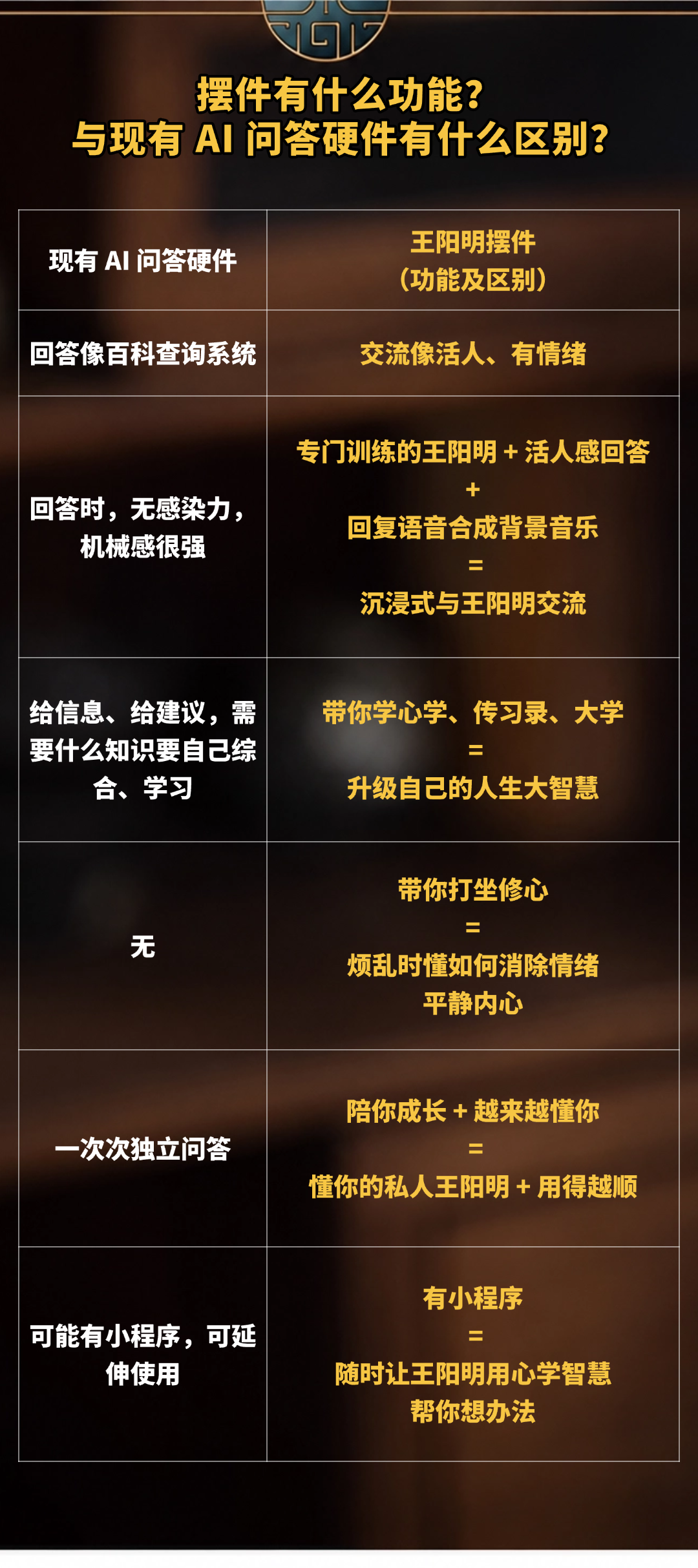
02 / What makes it different
| Dimension | Ordinary AI Q&A hardware | Wang Yangming Thinking AI figurine |
|---|---|---|
| How it answers | Mostly queries for information and answers directly. | It reads a question through Wang Yangming’s thought and responds as a figure with a stance. |
| Character expression | The voice can be configured, but answers tend to feel mechanical. | Character setting, conversational style, and voice are designed together, for a response you can recognize. |
| Knowledge and action | It gives information or advice; applying it is left to the user. | Conversation covers the philosophy of mind, the Instructions for Practical Living (Chuanxilu), and related themes, helping users carry understanding into concrete action. |
| Quiet reflection | Usually ends with a single question and answer. | The images show directions such as teaching the philosophy of mind and sitting meditation; specific skills depend on the actual version. |
| Continued use | Conversations may feel independent of one another. | Continued conversation is designed around a consistent body of thought, personality, and expressive boundaries. |
Detailed feature comparison / 02
The detailed comparison image is on the right.
03 / Form and spirit
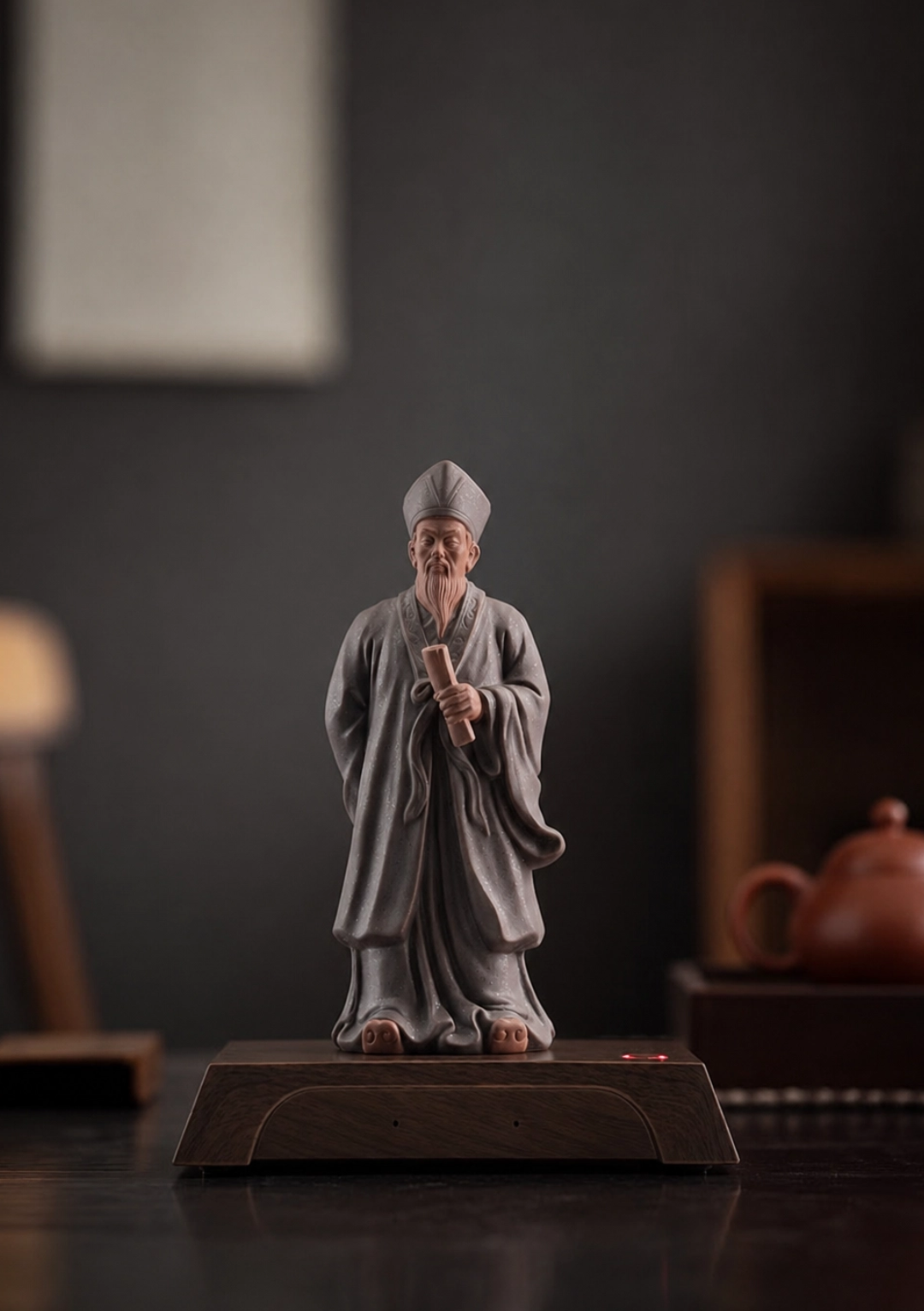
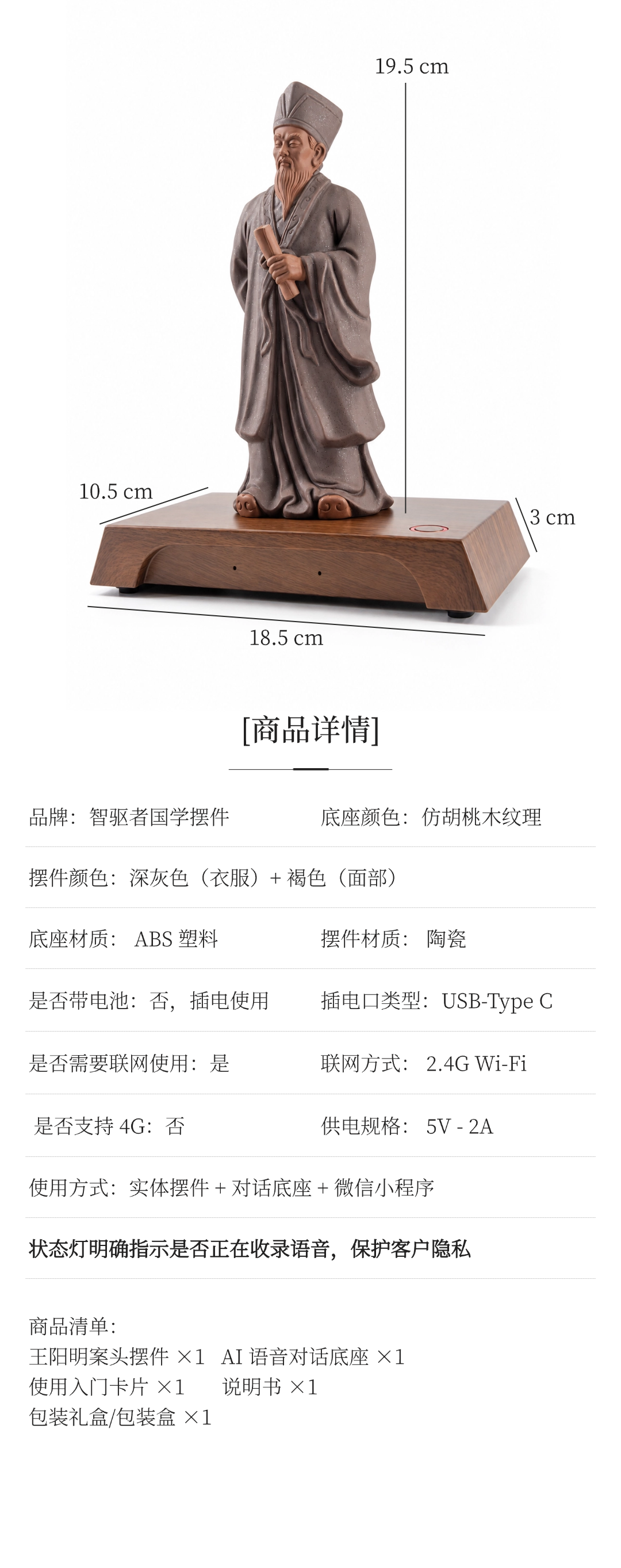
The figure is paired with a wood-grain base, placing a cultural figure and a thoughtful AI in the same everyday space. A desk or a tea table is enough to begin a conversation.
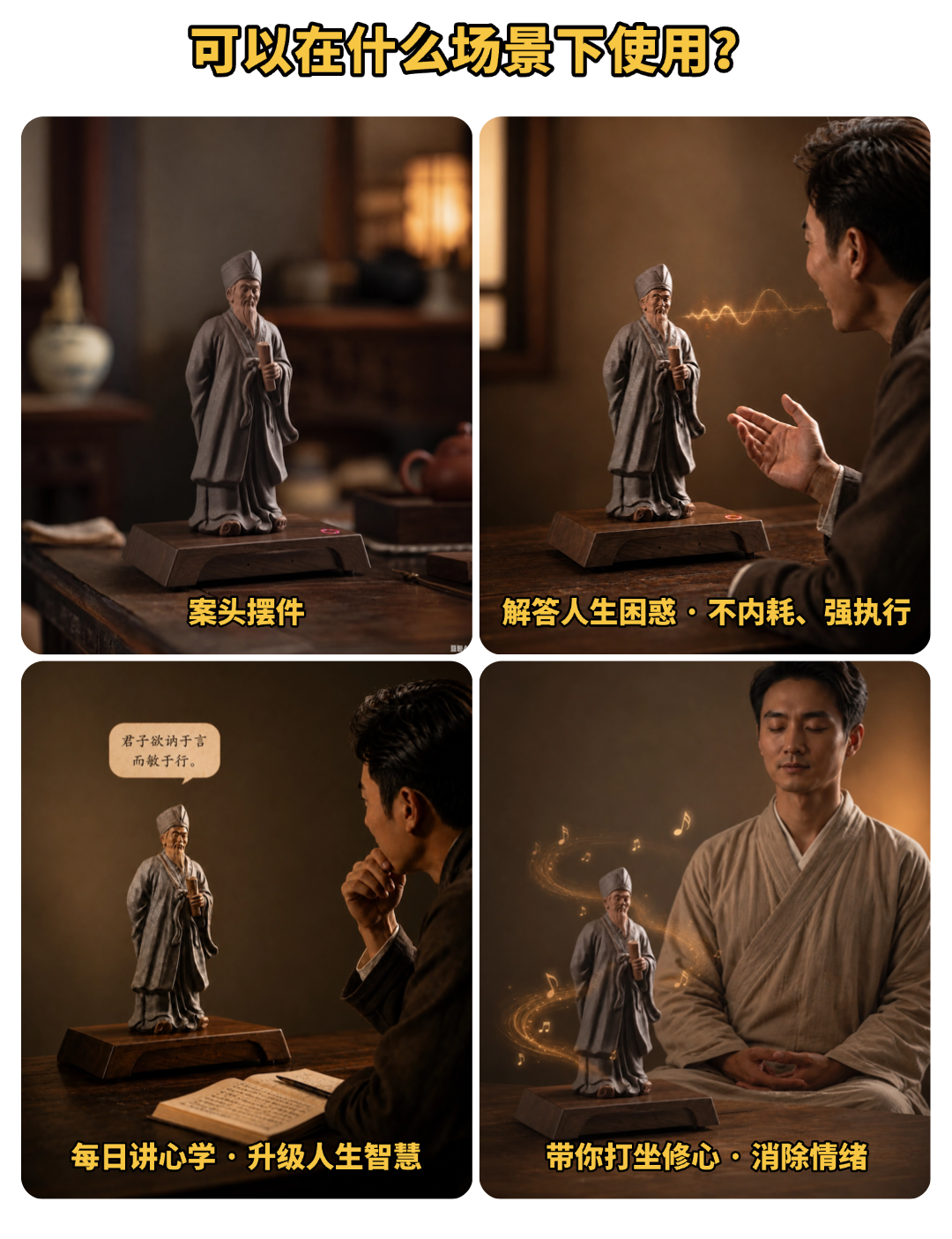
See product details ↘04 / Moments of use
From an everyday greeting to a discussion of the philosophy of mind, from settling the mind when things feel tangled to weighing a difficult choice, bring the situation you are in.
05 / Product details
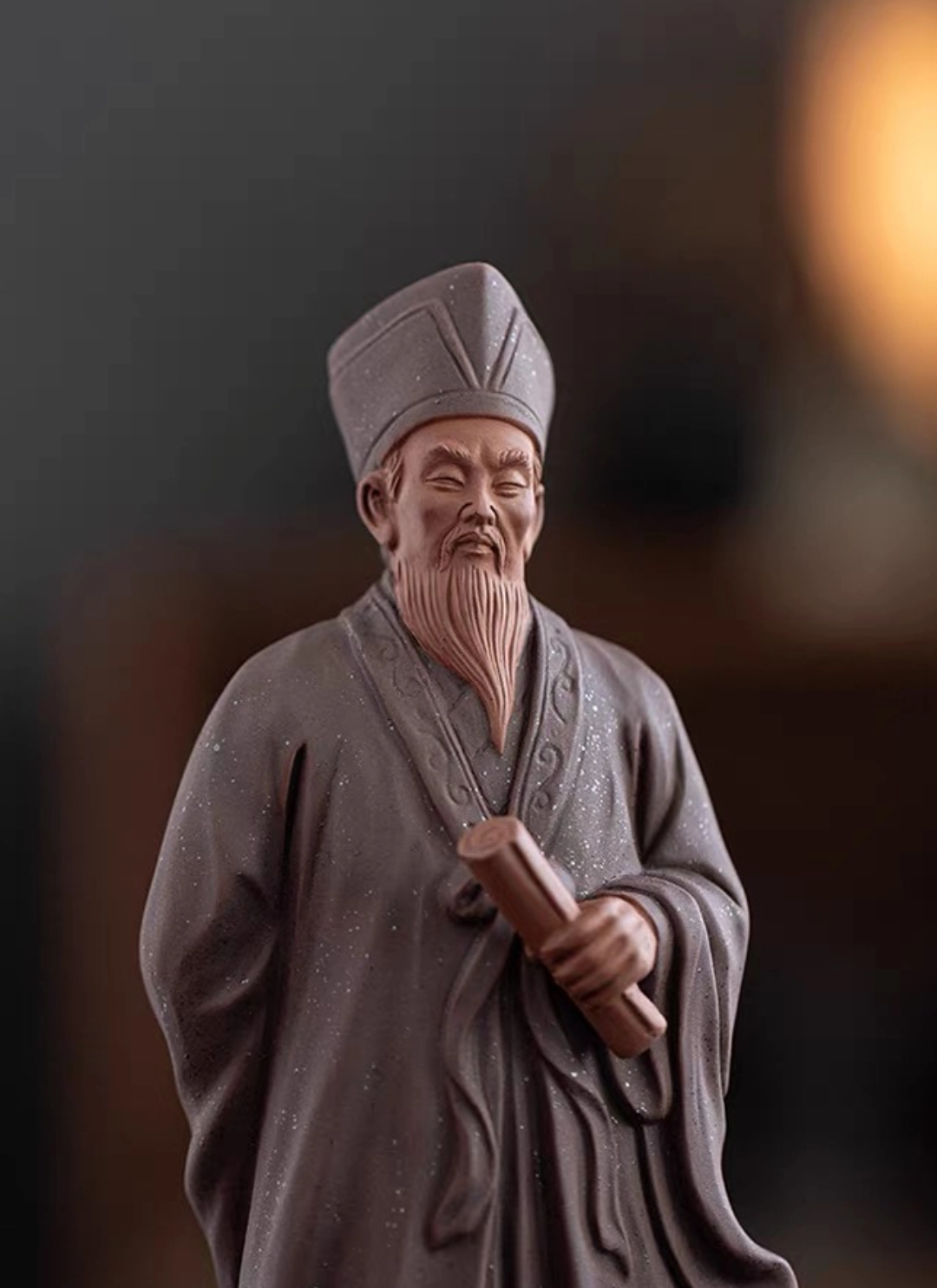
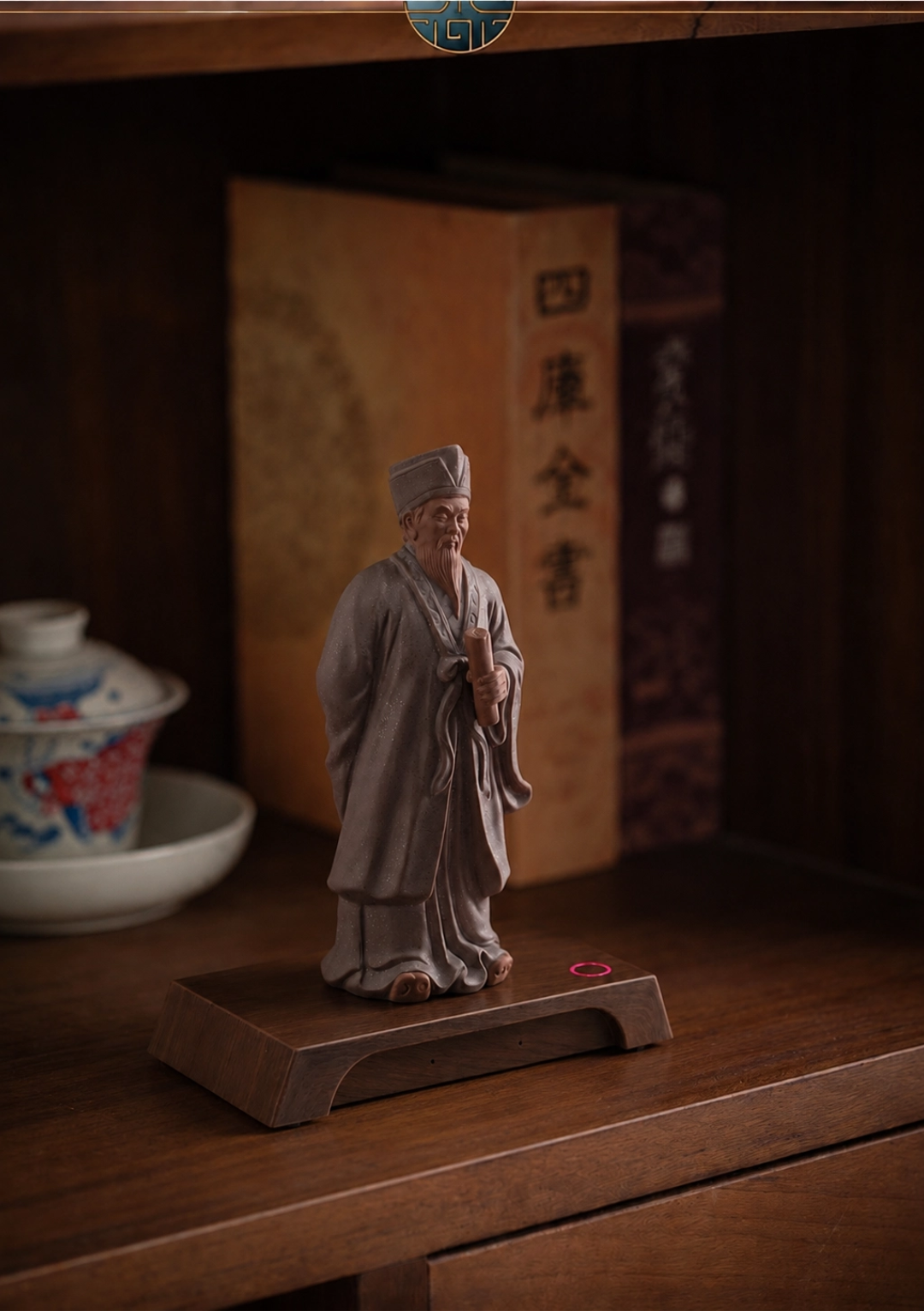
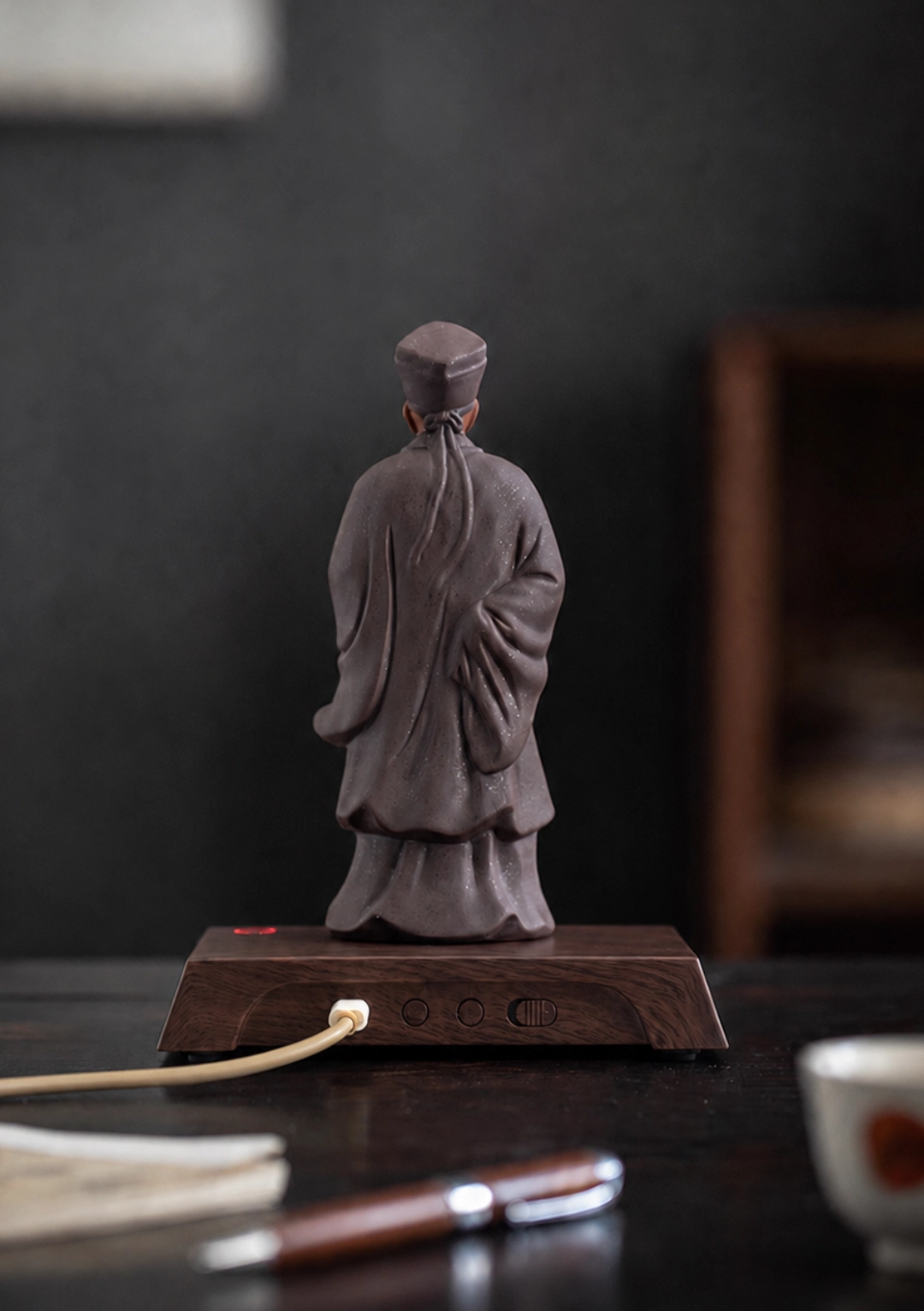
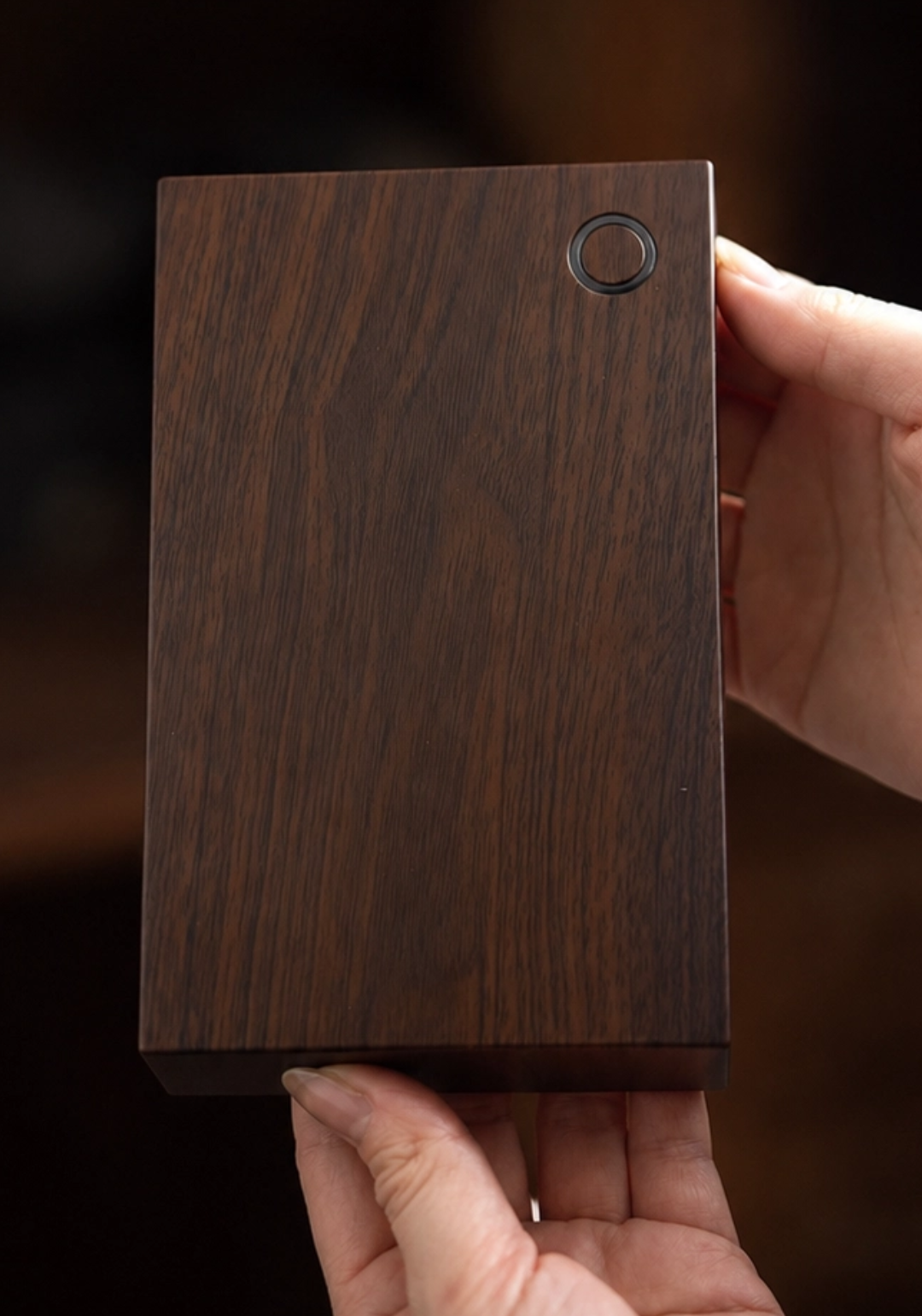
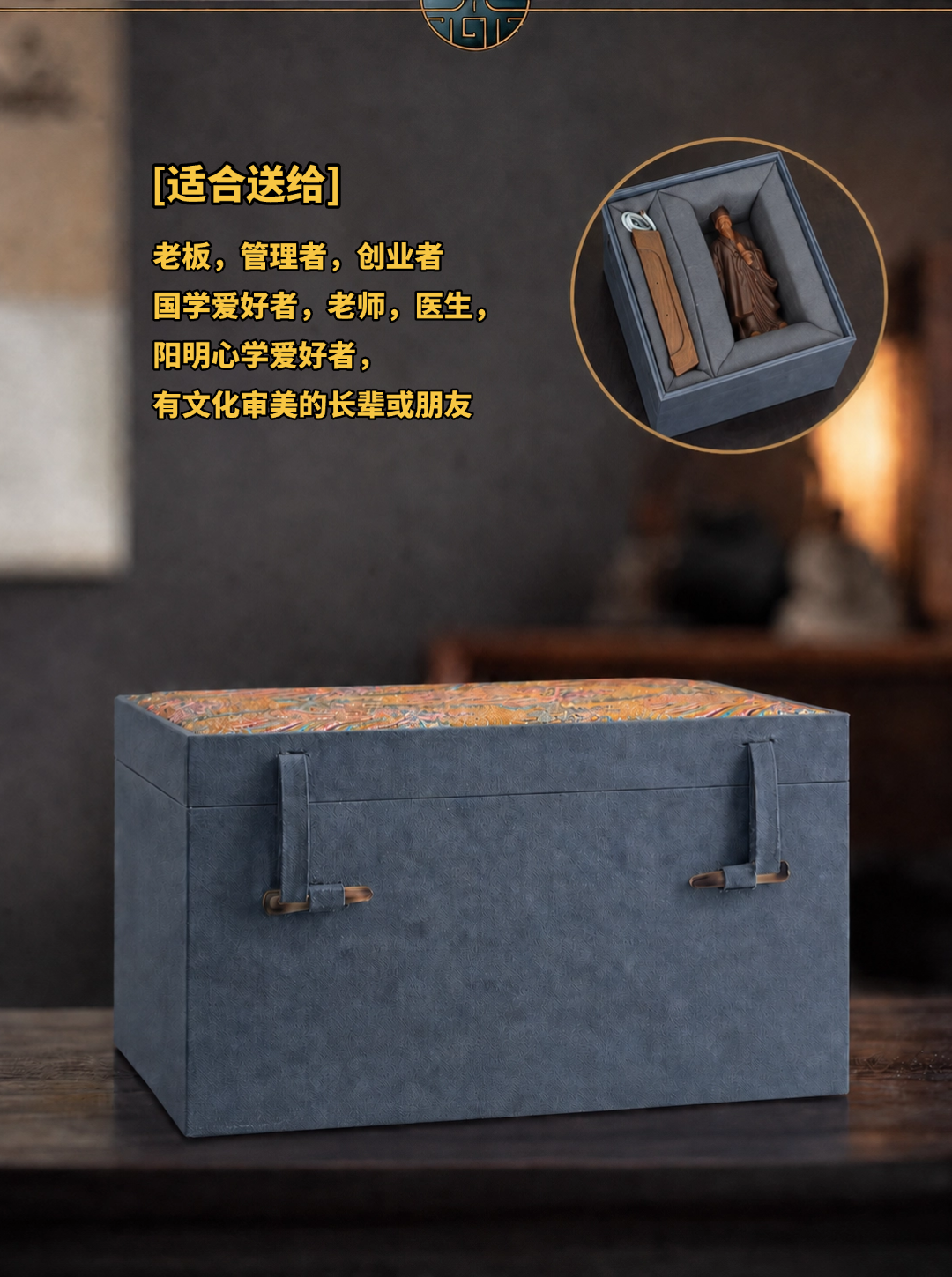
06 / A gift with meaning
The gift box holds the character figurine and the conversation base. A gift for family, friends, or partners who love Chinese culture and are willing to slow down and think.
Packaging and included items depend on the delivered version.
07 / Product information
Detailed product specifications are below.
Bring cultural figures into real-life settings.
For product versions, purchasing, and channel partnerships, contact us.